The occasion, honestly
Karva Chauth (ਕਰਵਾ ਚੌਥ) is the North Indian festival where a married woman fasts, from sunrise to moonrise, for the long life of her husband. In Punjab, in Delhi, in Haryana, in the diaspora — Toronto, Surrey, Melbourne, New Jersey, Southall — Karva Chauth is one of the two festivals every Punjabi wife dresses for. The other is Teeyan.
In 2026 Karva Chauth falls on Sunday, October 5. In 2027 it falls on Sunday, October 24. This is a moon-and-stars festival — the suit is dressed after sunset, worn through the moon-sighting, and photographed with a diya lamp on the terrace or a chaand-dekhna karva in the hand.
What to wear to Karva Chauth
The colour, first
Red is the traditional Karva Chauth colour — sindoor red, marital red, the colour of a bride's chunari carried forward into married life. But in the Punjabi diaspora over the last decade the palette has broadened honestly: deep maroon, oxblood, saffron, gulmohar orange, dusty rose, and even a rich plum are all seen at moon-sighting gatherings in Toronto and Surrey. If your suraj-sindoor (the sindoor line at the parting) is fresh red on Karva Chauth, your suit can carry any warm bridal tone underneath.
Avoid black entirely, and avoid stark white — Karva Chauth is a shringar (adornment) festival, not a mourning day.
The silhouette
Karva Chauth is a full-shringar evening — you will be photographed. The three most-worn silhouettes for Karva Chauth in the Punjabi diaspora:
- Anarkali — the safest, most photograph-friendly, most flattering. A floor-length flare with a fitted bodice. Wear if you want traditional glamour without heavy weight.
- Gharara — for the Karva Chauth-with-in-laws evening where an old-Delhi feeling is right. The knee-band (aara) reads as celebration.
- Salwar kurta with palazzo — for the modern working wife who fasts, dresses at 6 pm, and still needs to sit through a two-hour thaali ceremony without becoming uncomfortable.
The karigari
Karva Chauth is a photographed festival — the karigari matters more than at Teeyan. Zardozi, dabka, gota patti, or a soft phulkari border read best under indoor light. Avoid heavy mirror work — mirrors flare when a phone flash hits them and ruin the photograph. Avoid sequin fields for the same reason. Real hand thread work photographs deep and warm; machine sequin work photographs cheap and flat.
Three TEEYAN suits chosen most often for Karva Chauth
These three come up most in Karva Chauth commissions on WhatsApp:
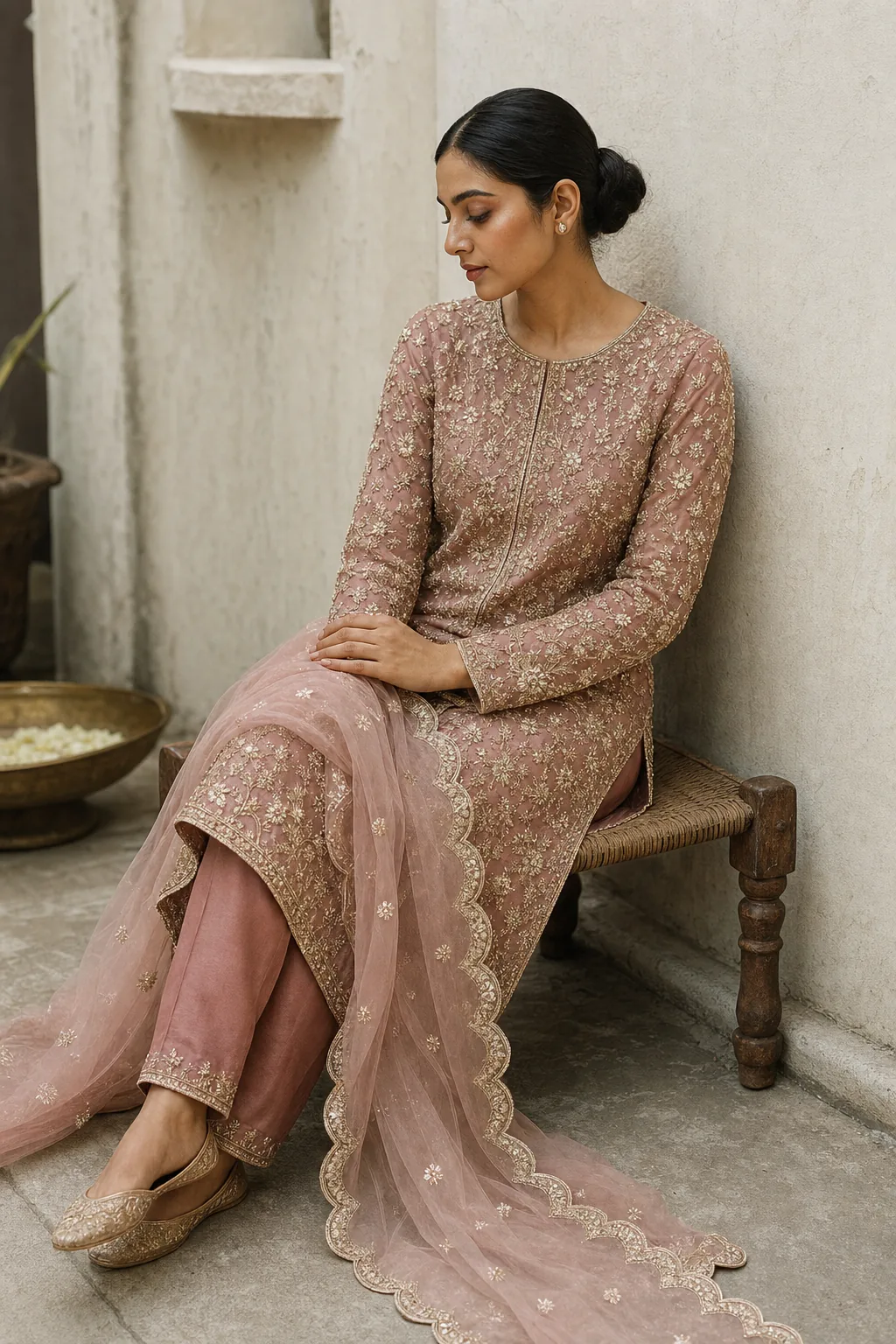
- Gulabi Dhup — dusty rose with dabka and moti work. The most flattering under warm indoor light, and photographs beautifully with a diya.
- Jamun — deep plum gharara with zardozi and gota patti. Reads as full evening bridal-adjacent without being a wedding suit.
- Nili Raat — for the woman who has already had her heavy red wedding, who wants Karva Chauth in ink instead. Mukaish star-field, anarkali, unforgettable in photographs.
The commissioning timeline for Karva Chauth
Realistic timeline for a Karva Chauth commission:
- Now → mid-August — WhatsApp consultation, silhouette and colour decided, measurements taken over video call.
- Mid-August → late September — cutting, dyeing, karigari (220–280 hours of hand embroidery for a rich piece).
- Late September — finishing, quality inspection, courier despatch from Mohali.
- Early October — duties-paid arrival in Canada, USA, UK, UAE, Australia, or India, ahead of the October 5 moon.
How Karva Chauth is different from Teeyan and Diwali
Three back-to-back autumn festivals need different wardrobes ji, and it is worth being honest about which is which:
- Teeyan (Sawan, early August) — bright, joyful, phulkari, outdoor. Movement-friendly.
- Karva Chauth (Kartik, October) — deep, marital, indoor evening, karigari-rich, photograph-ready.
- Diwali (Kartik, October–November) — celebratory, family-large, brocade or lightweight zardozi, comfortable through a long night.
Wearing a Karva Chauth suit to Teeyan would feel heavy. Wearing a Teeyan suit to Karva Chauth would feel underdressed. Both would be honest, but neither is what her mother would advise.